“As an entrepreneur, I've learned to surround myself with people who have skills that I lack. FB ads and email funnels were something I knew I wanted to be doing in my business but I had no idea where to start. I put it off for a while because it was outside my comfort zone, and it wasn’t until I found Hailey that I felt confident moving forward with them. Hailey took the reigns and created a system for me that was not only profitable, but really helped me create more space in my day to work on the things that are in my zone of genius!”
Lauren Bongiorno Diabetic Health Coach
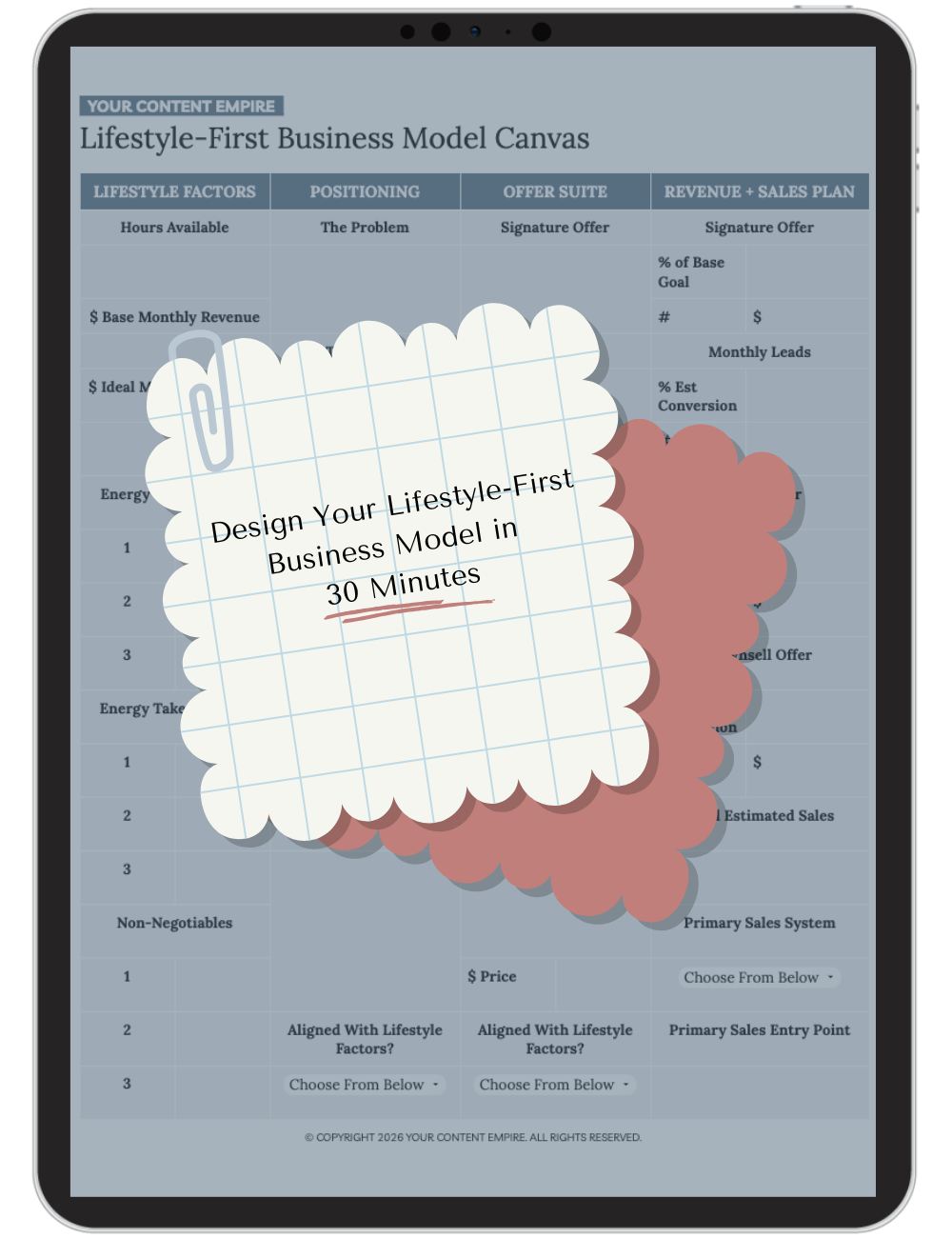
Click Here to Design Your Lifestyle-First Business Model with My Free Template
The 4 Daily Habits That Helped Me Scale To Consistent 10K Months
If I had to start over today and build a brand new business to consistent $10K months, I know exactly what I'd do differently.
Not because hustling doesn't work. It does. You can chaos your way to $5K months, even $10K months if you throw enough at the wall.
But getting to $10K once or twice is completely different from staying at $10K month after month with ease and calm and actual space to breathe.
At the end of 2024, I shut down my agency. And I'm not going to lie, I had a total existential crisis for a few months. I stopped selling entirely because I had no clarity about what I even wanted my business to be anymore.
I hit a point where I thought: I either quit completely or I build the business I actually want to run, that I've maybe been a bit scared to commit to because it feels too simple. Because I had literally nothing to lose.
So I simplified everything. I focused on four daily habits. And those habits didn't just help me restabilize at $10K months. They helped me get there with ease instead of exhaustion.
Today I'm walking you through exactly what those four habits are and why they work.
Prefer to watch instead?
Want to listen on the go?
There are two main paths to $10K months.
There's the chaos path. Multiple offers, back-to-back launches, trying to be everywhere, saying yes to everything. And that path works. I'm not going to tell you it doesn't. A lot of people hit $10K months this way.
But chaos can get you to $10K once or twice and then you're exhausted. Because you're constantly starting over. Every month is a scramble to figure out where the revenue is coming from.
Then there's the calm path. Strategic simplicity, consistent execution, systems that make it easier every time you repeat them.
And the little secret? The calm path doesn't just work. It actually works better. It's more sustainable. It's more scalable. And honestly? It's much much more enjoyable.
When I shut down my agency at the end of 2024, I had a choice to make. I could rebuild the same way I'd built before, with all the complexity and chaos. Or I could build differently.
So I simplified my business model down to the essentials. I started having daily conversations again. I got booked back up within the first 30 days. And then I built the systems that let me stay at $10K months without the constant hustle.
The four habits I'm sharing with you today aren't theory. They're exactly what I used to restabilize my business. And they're what I teach my clients who want to stabilize their revenue without burning out.
Let's break down each one.
Habit 1: Strategic Simplification
The first habit is strategic simplification. And the framework I use for this is called The ONE Model.
I work with business owners who are multi-passionated, multi-talented. They can help with a dozen different things. They have multiple offers, multiple audience segments, multiple marketing strategies all running at once.
And they wonder why they feel scattered.
Chaos can get you to $10K months. But it can't keep you there. Because you're constantly starting over. Every month you're rebuilding momentum from scratch.
The ONE Model is different. It's your simplicity filter. It helps you focus on the six essential elements that create consistent revenue without the chaos.
One Offer: This is your main revenue generator right now. Not your only offer forever. But your focus offer. The thing you're known for. The thing you're actively selling and fulfilling.
When someone asks what you sell, you have one clear answer.
And here's what's important about pricing this offer: you want to reach your monthly revenue goal through a maximum of four sales. Or if it's a membership, you're stacking recurring monthly revenue to get closer and closer every month by adding new members while keeping retention high.
One Identifier: This is who you're known for serving. Not everyone you could serve. Not everyone who might benefit from your work. The specific person who sees your content and thinks “Oh that's me.”
And here's what I mean by identifier. It's not demographics. It's adjective nouns plus desires that someone can see themselves in. Like “starving artists who want to make a full-time living from their work” or “overwhelmed teachers who want lesson plans created for them.”
This is your positioning. Your market. Your people. But in a way that speaks to them so they can self-identify themselves in your messaging.
One Sales System: This is your primary path from stranger to buyer. And there are two main options here: evergreen or recurring.
Recurring might look like monthly live workshops. Evergreen might look like a private podcast funnel or an evergreen webinar.
You have one main system that consistently converts leads into customers.
One Engagement Platform: This is where you build relationships daily. Maybe it's Instagram. Maybe it's LinkedIn. Maybe it's your email list.
You're not trying to be everywhere. You're deeply present in one place where your people actually are.
One Traffic Engine: This is your primary lead generation method. Maybe it's organic content. Maybe it's paid ads. Maybe it's partnerships or podcast guesting.
You have one main engine bringing new people into your world.
One Core Content System: This is one expertise channel where you can go into depth. Like a podcast, YouTube channel or written blog. Ideally weekly but could be biweekly.
Something I teach is turning your editorial calendars into sales campaigns, but that isn't possible unless you have this one core content system defined. All of your other content flows from here.
Here's what I want you to notice about The ONE Model.
I'm not saying you can only ever have one offer or one platform or one strategy. I'm saying that at the $10K monthly level, trying to do everything makes everything harder.
The ONE Model gives you a decision filter.
Before you add anything new, ask yourself: which ONE does this replace or support? If it doesn't fit in your ONE Model, it's a distraction right now.
Here's the caveat I always give: this isn't the only model you'll ever use. But it's the model that gets you to consistent $10K months with the least complexity. Once you're stable here, once this is working and you have systems supporting it, then you can add strategic complexity.
But most people try to add complexity before they have stability. And that's why they stay stuck.
When I restarted my business, this is what I did first. I got clear on my ONE Model.
One offer: My coaching program. One identifier: Business owners who want to scale but not at all costs. One sales system: Free and paid strategy calls from warm leads. One engagement platform: Instagram. One traffic engine: Paid ads. One core content system: YouTube with audio and written options, but focusing on YouTube first.
That's it. That was my entire business model. And it was enough to get me back to consistent $10K months quickly.
Here's what I want you to do: map out your ONE Model. Get clear on these six elements. And then use this as your filter for every decision you make.
If it doesn't fit in The ONE Model, it's a “not right now.”
Habit 2: Sell Every Day
The second habit is to sell every day. And I don't mean pitching your offer every single day. I mean treating every piece of content you create as a mini sales funnel.
Your content isn't just about engagement or authority or staying top of mind. Those things matter, but your content also needs to lead somewhere.
Every post should have a next step. Every piece of content should be moving people closer to your offer.
And the way you do this consistently is through what I call The Content Sales Funnel Stack.
Layer 1: Content Campaigns This is your editorial calendar transformed into sales campaigns. Each month's content theme should lead to a specific offer, most likely your ONE offer.
Instead of just posting about random topics your audience might be interested in, you're strategically planning content around what you're selling that month.
Layer 2: Daily Content System This is the daily execution. This is your habit of showing up consistently so the touchpoints accumulate.
You need to get your content in front of people every day. Either through your daily showing up, which I call play. Or through paid distribution, which is pay.
Pay or play. But your life will be a lot easier if you just pick one.
The truth about selling is that we don't know which touchpoint was the one that led to the sale. It's cumulative. Research from 2025 says that it takes 50ish touchpoints for someone new to you to feel ready to buy. And honestly, I think that's only going to go up. Buying cycles are lengthening.
So instead of fighting that, work with it. Design for it. Increase your touchpoints.
Your job isn't to make every post perfect. Your job is to show up consistently so the touchpoints accumulate over time.
Layer 3: Evergreen or Recurring Sales System This is the system that converts warm leads without you needing to constantly launch.
Maybe it's a monthly live workshop that leads to a sales conversation. Maybe it's an automated webinar funnel. Maybe it's an application process that's always open.
The point is you have a system that's working in the background turning interested people into paying customers.
All three layers work together. Your campaigns give you strategic direction. Your daily content builds the touchpoints. Your sales system converts the warm leads.
Now let's quickly talk about direct versus indirect content because this is where things can get a little muddy or where you might worry about “always selling” or being salesy.
Indirect content talks about a topic or theme related to your paid offer. The goal is to raise awareness and identify people who are interested in the topics and so may be interested in your offers by extension.
Indirect content might mention the offer in passing but it doesn't include a direct invitation or pitch. Think of these as product placements. It's there, it's visible, but it's not stopping the story to sell you something.
Direct content contains a direct invitation to your offer or the next step. The goal is to sell your offer or start a conversation about your offer so you can answer questions, share social proof, talk about what's included.
Direct content includes the direct link or shares how to find it. It's the commercial. And that's okay. You just need to use it strategically.
Here's my recommendation: most of your content should be indirect. Like 80 to 90 percent. You're building trust and awareness. But you need consistent direct invitations too, around 10 to 20 percent.
And during launches? You flip it temporarily. More direct content because you're actively enrolling.
Every piece of content should lead somewhere. Even if it's just leading people to engage with you or save the post or click to your profile. There's always a next step.
So the habit is this: post every day or get your posts in front of people every day through paid distribution. Make sure each post has a clear next step in mind. And trust that the touchpoints are accumulating even when you can't see the immediate results.
This habit builds momentum. And momentum creates sales.
Habit 3: Have More Conversations
The third habit is to have more conversations. And here's the principle behind it: increased connection equals increased conversions.
But the number one rule of conversation club is: don't go in trying to sell.
Go in trying to connect. The sale is a natural result of genuine connection, not the goal of every conversation.
Conversations build trust faster than content. Content gets people interested. Conversations turn interest into trust. And trust turns into conversions.
You're never going into a conversation with the goal of closing a sale. You're going in with the goal of connecting, supporting, helping, being curious, being present.
Let me be really clear about what I mean by conversations. This is a lot broader than you might think.
DM replies, story replies, comment threads, talking to warm leads, following up with people who signed up for your freebie, live sessions, workshops, email replies. Any genuine back-and-forth counts.
When I rebooted my business, this habit is what got me booked back up within the first 30 days. I started having daily conversations again. And people buy from people they know and trust. Conversations build that trust faster than content ever will.
So let me show you how to systematize this.
Here’s the Daily Conversation System. The first step is to identify your segments. These are the different groups of people you want to have conversations with regularly:
New customers: People who just bought from you
New followers: People who just started following you
Engagers: People who regularly comment, save, share your content
Existing clients: People currently working with you
Past clients: People who've worked with you before
Hot leads: People who've shown interest but haven't bought yet
Each segment needs a different type of conversation.
New customers need to be welcomed and supported. You're checking in to make sure they have what they need and they know how to use what they bought.
New followers need to be noticed and acknowledged. You're letting them know you see them and you're glad they're here.
Engagers need to be rewarded with more connection. You're thanking them for showing up and deepening the relationship.
Existing clients need to be checked in on and celebrated. You're staying present and acknowledging their progress.
Past clients need to be stayed connected with. You're maintaining the relationship even after the working relationship ends.
Hot leads need to be gently followed up with. You're offering support without pressure.
Now here's how you make this a habit: set a daily target.
Pick a number of meaningful conversations you want to have every day. Maybe it's three. Maybe it's five.
This isn't about volume. It's about consistency and genuine connection.
Conversations don't mean chasing people. Conversations mean showing up where your people are. Replying when they engage with you. Following up when it makes sense. Being present and available.
You're not DMing random people to pitch your offer. You're connecting with people who've already shown some level of interest or engagement. It's the ultimate permission-based marketing.
The Daily Conversation System gives you a framework so you're not just randomly reaching out. You're strategically connecting with the right people at the right time with the right message.
This habit alone can transform your business. Because most people are so focused on getting more followers and more content out there that they forget the power of genuine human connection.
Don't make that mistake.
Habit 4: Think Systems
The fourth habit is to think systems. You can hustle your way to $10K once. But to stay there month after month? You need systems.
Systems are what make $10K feel easier and easier instead of exhausting.
Everything changes at $10K months because you need recurring, predictable processes. You can't just wing it anymore. You need repeatable systems that work whether you're showing up that day or not.
Now let me define what I mean by a system because I think this word gets thrown around a lot.
A system is just a repeatable process that gets predictable results. That's it. It's not complicated. It's just something you can do over and over with less effort each time because you've documented how it works.
Your goal is to turn the tasks you do over and over into systems you can repeat with less effort each time.
So here are some potential systems to build at the $10K monthly level:
Content system: How you consistently create content without starting from scratch every time
Daily engagement system: Your conversation habit that we just talked about
Daily content system: How you show up and post consistently
Monthly sales system: Your recurring revenue process
Lead gen system: How new people find you
Onboarding system: How you welcome new customers and set them up for success
Delivery system: How you serve your clients and get them results
Now don't try to build all of these at once.
That's overwhelming. And overwhelm leads to inaction.
Instead, use what I call the one-a-week rule.
Pick one system per week. Create it or optimize it. Then move to the next one. In eight weeks you'll have eight systems working for you instead of zero systems and total overwhelm.
Ask yourself: what am I doing manually right now that I could turn into a repeatable system?
Start there.
Maybe it's how you onboard new customers. Right now you're probably sending a custom email every time someone buys, manually adding them to things, trying to remember what you need to send them. Turn that into an onboarding system. Create the welcome email template. Set up the automation. Document the process. Now every time someone buys, the system handles it. You don't have to remember. You don't have to recreate it. It just works.
The beautiful thing about systems is they compound. Each system you build makes the next one easier to build. And each system you have in place frees up mental energy and time to build the next one.
After I simplified my business model with The ONE Model and got booked back up through daily conversations, systems are what let me scale beyond $10K without adding more hours or more chaos. But they also would have let me stay at $10K months while drastically reducing my work hours.
I could grow because my systems could handle it.
What's The Next Step? Start Here ↓
So you might be listening to this and thinking “Okay I understand these four habits. But how do I actually implement this?”
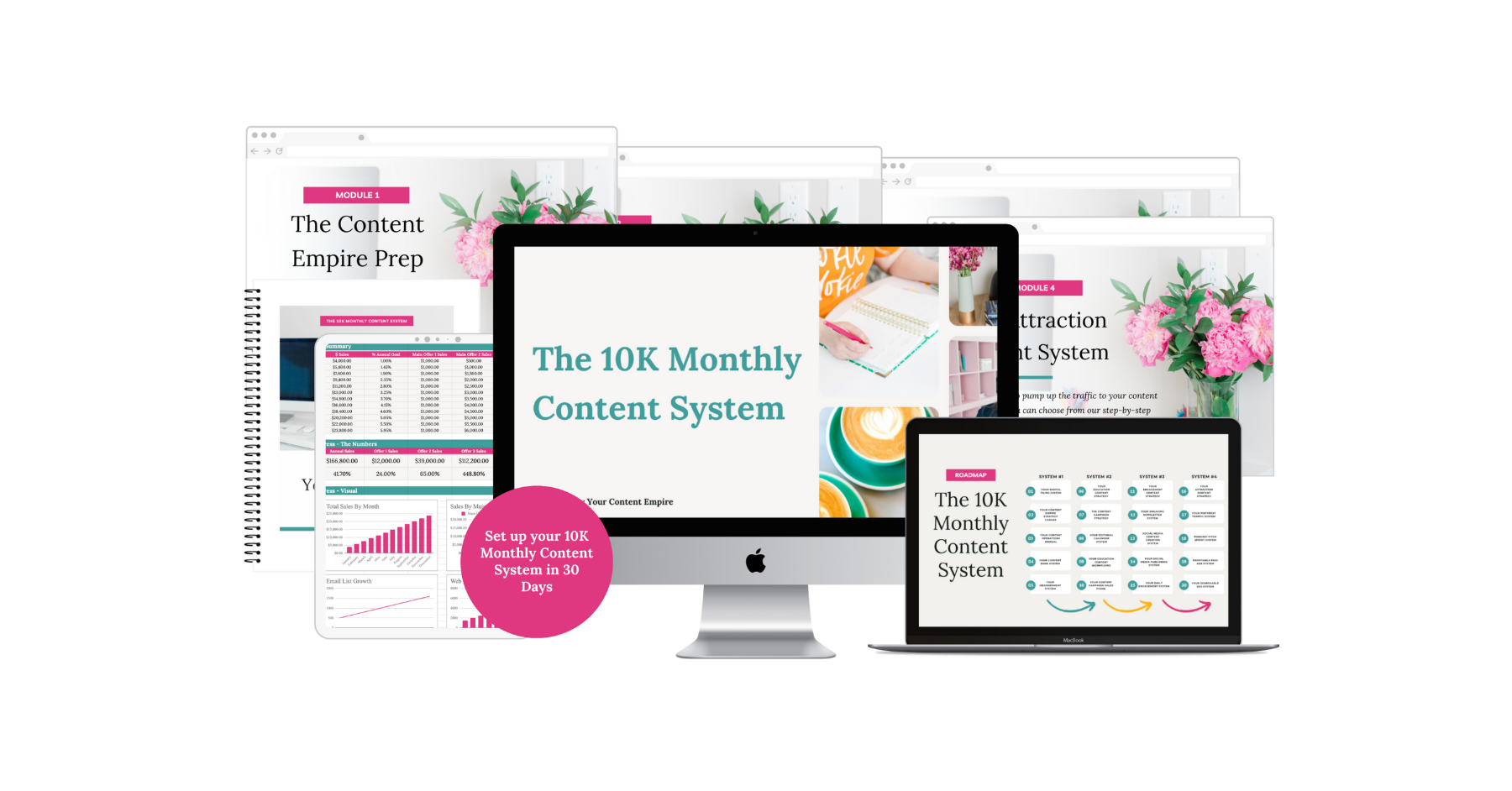
This isn't just a group coaching program about creating more content. This is the complete system for turning your content into a revenue engine that gets you to consistent $10K months.
Inside the program we build out your entire content ecosystem across four weeks.
Week 1 is your Monthly Content System where we map out your content campaigns so your editorial calendar is designed to support your revenue goals.
Week 2 is your Weekly Content System where we break down how to batch and plan your content so you're not falling behind on your editorial calendar each week.
Week 3 is your Daily Content System where we build the habit of showing up consistently with content that leads somewhere. This is where we implement Habit 2 and 3.
Week 4 is your Quarterly Visibility Generation Engine where we design your lead generation system so you have consistent new people coming into your world.
You also get the templates, the frameworks, the plug-and-play systems I use in my own business and with my private clients.
I’m Hailey and I help business owners who are tired of the hustle-harder advice build content systems that actually sell. No performative posting. No chasing algorithms. Just strategic, sustainable growth. More about me + my approach →
Stop guessing. Start scaling. This one-page template helps you design a business model that supports both your revenue goals and your actual life.
Browse By Topic
Scaling
Sales
Content
All Posts
Search The Blog
FREE TEMPLATE
The Lifestyle-First Business Model
Design a business model that supports both your revenue goals and your real life. This one-page template walks you through your lifestyle factors, positioning, offer map, revenue plan, and sales strategies so you can finally stop guessing and start scaling with clarity.
In This Post: How do you get more sales from your sales funnel? The best way to get more sales from your sales funnel is to follow up with the people who didn't buy the first time, since only about 5% of your audience is ready to buy at any given moment. Set up a...
In This Post: How do you reset your business model? You reset your business model by rebuilding it in the right order: lifestyle first, then positioning, offers, revenue planning and marketing. Follow that sequence and you can reset your business model in about 90...
In This Post: What is a monthly business retreat? A monthly business retreat is a full week you block off each month with no meetings, calls or client work so you can focus entirely on the projects that grow your business. Rotating through a few types of monthly...