“As an entrepreneur, I've learned to surround myself with people who have skills that I lack. FB ads and email funnels were something I knew I wanted to be doing in my business but I had no idea where to start. I put it off for a while because it was outside my comfort zone, and it wasn’t until I found Hailey that I felt confident moving forward with them. Hailey took the reigns and created a system for me that was not only profitable, but really helped me create more space in my day to work on the things that are in my zone of genius!”
Lauren Bongiorno Diabetic Health Coach
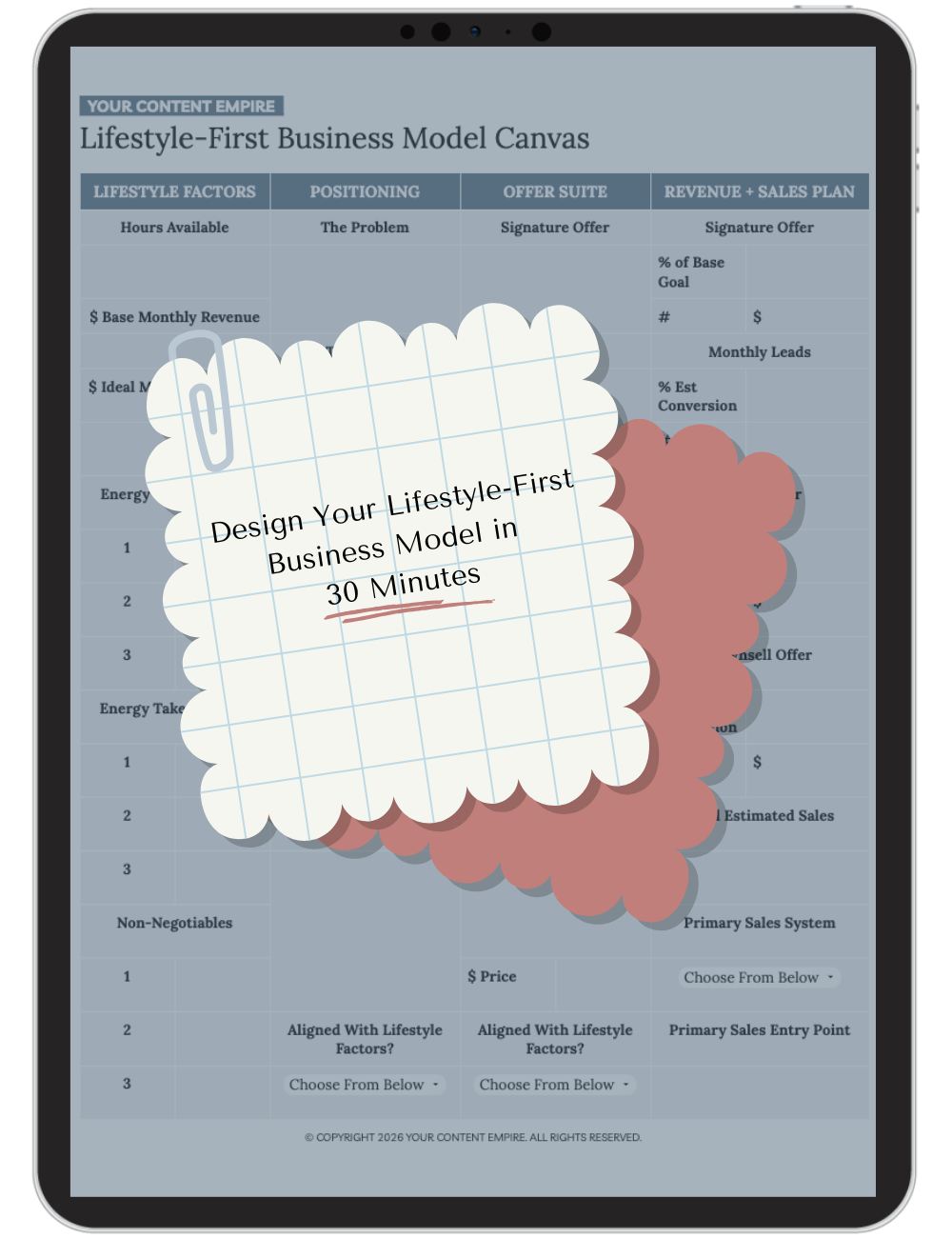
Click Here to Design Your Lifestyle-First Business Model with My Free Template
Your launch made no sales and you're convinced your business is broken. But what if I told you that based on the dozens of launches I've post-mortemed, your WHOLE launch probably didn't suck?
In this post, I'm breaking down my exact 4-level post-mortem process to diagnose what actually went wrong and the specific fixes that'll get your next launch back on track.
Prefer to watch “What To Do When Your Launch Made No Sales” instead?
Want to listen on the go?
Today we're talking about what to do when your launch makes zero sales – because let me tell you, this happens to the best of us, and it doesn't mean your business or your offer is necessarily broken.
Have you ever had a launch that felt like a complete disaster? If yes, give this video a like right now – you're definitely not alone.
But before we jump into solutions, we need to first separate the facts from the stories we're telling ourselves about what happened
Before You Begin – Diagnosing The Real Problem
Launches are a rollercoaster of emotions. You put so much of your energy and time into them and how you end up feeling day to day in the launch is a direct reflection of how people are responding through sales, engagement and sign-ups. It is the ultimate mind eff.
Because of this, when your launch isn’t working – meaning you’re making no sales – it’s easy and only natural to respond emotionally. The whole launch sucked. My audience hates me. My business is broken.
When this happens midway through the launch, it impacts your energy and how you continue to show up. Usually leading to more of the same – like no sales. And then you get to the end of launch, feeling completely defeated and wanting to ignore the epic disaster that’s just occurred, the last thing you might feel able to do is ask the real questions about your launch and find the answers without letting those emotions cloud them.
But that’s exactly what you have to do.
You have to find out what went wrong.
Because based on the dozens and dozens of launches I’ve post-mortemed, your WHOLE launch likely didn’t suck. But we have to look to the numbers to know – was it a leads and audience issue? A traffic issue? An offer issue? A messaging issue? Only then can we fix the right things and get your next launch back on track.
I’ve had many clients with many a botched launch, who chose to stick with it, do the work, and have gone on to run the same launch, tweaked and optimized, to get five- and six- figure results. They never would have gotten those results if they hadn’t done this process I’m going to share with you.
My approach is a post-mortem review of all the numbers and then based on those numbers to pick the right response level. But before you begin, you have to be willing to look and grab your numbers first. And I’ll just quickly add that this process is not just for launches that have failed but also for the ones that go well. It’s just extra imperative when you’re at a launch, business, audience or offer crossroads to do your due-diligence before making a reactive decision.
Here’s the high-level post-mortem process:
Step 1 – Grab all of your pre-launch phase numbers. This is the phase of your launch where you’re warming your audience up before jumping into launch event invites or sales. If you didn’t do a prelaunch launch phase – ding, ding, ding – we may have just uncovered the issue right here. You want to grab the unique traffic to your pre-launch content, sign-ups to your pre-launch freebie or micro offer if you have one and identify the portion of your audience who engaged with your pre-launch content (either by signing up for your pre-launch freebie or micro offer OR who clicked on your pre-launch content emails) – these people represent your launch interest list.
Step 2 – Grab all of your launch event invite numbers. Your launch event is the challenge, workshop, video series, webinar – whether free or paid – that you ran to convert your interest list to your offer. If you didn’t run one – another ding, ding, ding chiming off here – we may have identified the issue as not validating your leads well enough by hosting an event or having enough engagement with your audience going into the sales phase. While an email-only launch is well and good – it’s more of a one-way conversation campaign than a launch and the results may well reflect that. In terms of numbers, you want to know the unique people who arrived on the opt-in page, how many people signed up, the conversation rate of that page, how many people showed up live and how many people watched the replay or replays.
Step 3 – Grab your sales numbers. You want to know how many people arrived on the salespage, how many people clicked through to the checkout page, how many people purchased (or in this case, we know that number is zero but we have to find where they fell off). Ideally you did this before you launched your offer, but I find it also helpful to create a test coupon for your offer and go through each step of the purchase flow and make sure everything was working – technically speaking. You also want to look at your sales emails. What were the opens and open rates plus what were the clicks and click-through rates. What portion of the clickers were fence sitters – meaning that they clicked through to the salespage multiple times but didn’t end up ultimately buying.
Step 4 – Analysis time. Looking at the pre-launch numbers, how many sales should you have had based on a base 1% conversion rate from your interest list? If you had less than 100 people in your pre-launch interest list – one issue to fix is your audience activation and engagement before the launch. Look at the traffic and conversion rate of your pre-launch freebie – can you see if it was a traffic or conversion issue at that level? Then move onto your launch event. Based on the traffic to your opt-in page, was it a traffic issue? Based on the number of people opting in, was it a leads issue? That would either mean that the opt-in page should be changed especially the messaging or the entire launch event was a mismatch for your audience and offer. How were the show-up rates? If those were an issue – it could be the launch event reminders or pre-engagement that were the issue. Finally, moving onto the sales phase, looking at your salespage numbers, was it a traffic issue (less than unique 100 people)? If the numbers were over 100 but still no sales, it points to a messaging or offer issue. But could also be an audience issue before you go throwing the offer out with the baby and the bathwater. Were people clicking through to the checkout page but falling out there? It could be a tech issue or the checkout page needing to be optimized or an abandoned cart automation introduced. If it was a traffic issue to the salespage – which emails were not performing? Or what touchpoints were lacking in the launch strategy – whether email, social or retargeting? Make a list of all of the issues identified by the numbers.
Level 1 – Messaging Audit
Let’s talk about the level 1 response – a messaging audit. Most of the launches I review have a messaging problem – even if that’s in conjunction with a traffic issue or a leads issue.
Here’s our tier by tier messaging response:
Tier 1: Audit each “offer” of your launch – you want to look at the paid offer (aka what you’re selling) but you also want to look at the pre-launch freebie offer (or micro offer if you’re going the paid route) and the launch event as well. I use a 5P approach when it comes to messaging any offer:
Do each of these offers solve a real problem that your audience is struggling with?
Do you own a branded process or framework that solves this problem in a unique way? This would be your signature framework or methods.
Do you talk about the payoffs (the results and benefits) that come from solving the big problem?
Do you back up your claims with proof – either your own journey or those of clients/customers you’ve taken through this process?
And the final layer – do you use the words of your person – your ideal client – when talking about the problem, process, payoffs and proof? When you’re not using their language, you’re creating a disconnect between your offer and your audience that makes it much harder to sell it to them.
My favourite thing about this 5P messaging framework and audit is how little selling you actually have to do. You don’t actually have to hard sell your offer – you just need to hardsell the problem, your process and the payoffs. That’s it.
Tier 2: You’re going to take the same 5P process to audit each of your offers’ main touchpoints.
For your paid offer – this is the salespage, checkout page, sales emails, social posts and stories and retargeting ads.
For your pre-launch freebie and launch event – this is the opt-in page, invite email, social posts and stories plus any paid ads.
Tier 3: If after going through the previous 2 messaging response tiers, you’re not 100% solid on what your audience cares about and how they feel/think/talk about these things, you’re going to go talk to them.
This might be a survey sent to your entire audience asking them things like –
What are you struggling with most when it comes (insert your topic area)?
If you could wave a magic wand and solve any problem related to (insert your topic here), what would you wish for?
How would it feel to finally solve that problem?
What have you tried previously to solve that problem?
And you’re going to entice them to complete this survey by offering a gift or a giveaway draw for completing the survey.
Alternatively this might look like having 5-7 market research questions with people who fit your ideal client profile. Asking the same general questions but treating each question as a discussion with follow-ups and tangents for rich and nuanced feedback.
You’re going to use these to determine if you have the right offers (or offer packaging like bonuses that respond to real objections) and to update your messaging on all of your offers’ touchpoints too.
Level 2 – Traffic Issue
Let’s talk about your level 2 response – which is for anytime you’ve identified a traffic issue. There are 3 main things that we can do to address a traffic problem but really this is one of the simpler issues to fix.
Tier 1 fix – I want you to get really really real about your goals. How many sales did you want to make in this launch? Then we’re gonna back it with numbers. Far far far too often I see people who have a big launch goal but no clue on what the math of getting there is going to look like. Take your goal and divide it by either your regular conversion rate or the base industry standard of 1%. Then to figure out how much traffic we need to reach that lead goal, take your that lead number you just calculated and divide it by your launch event opt-in page conversion rate. That’ll tell you how much traffic you need to be driving to that page. Here’s an example. I had a goal of 10 sales in my launch. Based on a 1% conversion rate, that means I need 100 leads. Then let’s say my launch event opt-in page converts at 40% that means I need 2500 unique visitors to my opt-in page. Not only can this math help you figure out if you have a traffic issue in your launch, it’s also key in solving it too. That means next time you can create a strategy or ad plan that’ll get you the numbers you need.
Tier 2 fix – I want you to create a strategy for growing your email list with new fresh leads BEFORE and IN BETWEEN your launches. This helps with the traffic side of things because it means you’re going to have a more engaged email list to invite to your launch event which almost certainly will increase the uptake of people signing up for your launch event from your invite emails. List attrition is such a silent killer. If people have been on your list for a really long time and haven’t purchased anything, there’s a diminishing chance they ever will. So if before you had 5% of your list signing up for your launch event from your invite emails, with a fresher list, you could have anywhere between 10%-30% on average signing up. And if people aren’t signing up – it’s a big wake up call to look at the audience fit with your offer and launch event topic OR consider any timezone or time of day/week issues that might be getting in the way. A good example of this is my client who works with teachers, she was hosting her launch event during the school day and shifting it to evenings and weekends made a big impact in how much of her audience was able to sign-up and attend.
Tier 3 fix is to audit your launch touchpoints. This is the biggie I diagnose all the time. The truth is that the majority of people need to see your offer many many times before they’re going to say yes to it or it’s even going to break through their consciousness so they’re even aware you’re offering it. 2025 data from EmailToolTester.com says that people who haven’t purchased from you before need anywhere between 20-50 touchpoints before buying. And warm leads (people who’ve purchased from you before or who are warm on your list) they only need on average between 5-12 touchpoints. So you’ve gotta stack a lot of touchpoints in order to hit the sales you’re looking for. So be honest – were you phoning in your touchpoints? Were you including enough platforms in your launch strategy to get your offers in front of your audience in a multitude of ways?
Level 3 – Leads Issue
Time for the level 3 response – this is for when you identify (through the numbers) that you have a leads issue. Meaning that you’re either not attracting the right leads, validating them or your landing pages are not converting.
The first fix is to revisit your pre-launch strategy. Were people warmed up enough or did you hit them out of left-field with an unexpected offer? Taylor Swift or Beyonce may be able to drop surprise albums but…. (do I really need to say it?!) Ideally, you will have done 2 things: first, plan a 3-4 week runway for putting out content, sending emails and posting about your launch offer topic. And two, during that timeframe (and maybe even earlier), grow your email list with new people with a tightly connected pre-launch freebie that, by signing up for it, tells you they’re going to be interested in your paid offer too. The main aim of this phase is to identify the subset of your entire email list who’s most engaged and interested in the topic before trying to sell it to them. So in this phase you’ll either be reviewing what you did in the pre-launch, whether it worked or making sure to include that runway in your next launch.
The second fix is to really validate your audience and leads by switching out your free launch event for a paid version. This is the right move if you had a lot of people sign up for the launch event, but not buy from it or show up. Even though you’ll have less people signing up for a paid launch (like a challenge or workshop), they’ll be more engaged, more invested and more likely to convert. They’ve specially shown you they’re willing to pay for a solution to their problem or to reach some goal that really matters to them. It’s still really really important to pick an event that relates really closely to the offer you’ll be selling.
The final fix is to do an overhaul of your opt-in pages and salespage. Make sure you’re only changing things if you don't have a traffic issue to those particular pages OR you’ve uncovered messaging through the messaging audit that connects much better with your ideal customers. The first thing to prioritize for fixing is the entire top section including the headline, offer promise, call to action button, cover image and page ribbon.
Level 4 – Nuclear Options
Once you’ve ruled out traffic, lead and messaging issues as the culprit of your failed launch – only then is it time to go nuclear with the level 4 responses.
Fix 1: Do you have the wrong audience for this offer? Or is your list years old with people who have moved on to other things or stages of life or business? If you suspect this is the case, you can clean up your list by removing anyone who hasn’t opened or clicked an email in the last 6 months, run a re-engagement campaign with emails to let you know if they’re still interested in solutions to X and remove anyone who doesn’t click. A smaller email list full of engaged and validated people is far far better than a large list where the majority isn’t opening emails or even interested in what you offer anymore. At the end of the day – If they aren’t opening, they’re not buying — and they’re costing you deliverability.
Fix 2: Change Your Offer. Go back through your market research from the level 1 messaging response. What do your people actually want your help with? Use this info to design a new offer and launch it as a beta to validate it. It may be that you have the right people, but the delivery or positioning needs to be adjusted. Can the same content be sold under a more urgent promise? Can it be reframed for a narrower niche or shorter timeline? For example, maybe you can turn it into a 30-day intensive or offer a VIP cohort version with coaching.
Fix 3: Switch to 1:1 or Done-With-You (For the Short Term). If your audience isn’t ready for DIY, they may need hand-holding first. Try selling a high-touch version to validate and collect testimonials. Creating a “back pocket” service for qualified leads (lower marketing lift, faster cash). Think of this as your R&D Lab — prove the offer works live before scaling it into a one-to-many offer.
What's Next?
So what now? After you’ve analyzed your launch and picked the appropriate response level:
The key is to not let this latest launch define you, your business or your offer. Don’t let it stop you from launching again. So launch again – sooner than you might want to. Treat this last launch as a learning experience. Use the fixes to make changes and come up with a plan that addresses these potential issues in real time.
HEY THERE!
I’m Hailey and I help business owners who are tired of the hustle-harder advice build content systems that actually sell. No performative posting. No chasing algorithms. Just strategic, sustainable growth. More about me + my approach →
Stop guessing. Start scaling. This one-page template helps you design a business model that supports both your revenue goals and your actual life.
Browse By Topic
Scaling
Sales
Content
All Posts
Search The Blog
FREE TEMPLATE
The Lifestyle-First Business Model
Design a business model that supports both your revenue goals and your real life. This one-page template walks you through your lifestyle factors, positioning, offer map, revenue plan, and sales strategies so you can finally stop guessing and start scaling with clarity.
In This Post: How do you get more sales from your sales funnel? The best way to get more sales from your sales funnel is to follow up with the people who didn't buy the first time, since only about 5% of your audience is ready to buy at any given moment. Set up a...
In This Post: How do you reset your business model? You reset your business model by rebuilding it in the right order: lifestyle first, then positioning, offers, revenue planning and marketing. Follow that sequence and you can reset your business model in about 90...
In This Post: What is a monthly business retreat? A monthly business retreat is a full week you block off each month with no meetings, calls or client work so you can focus entirely on the projects that grow your business. Rotating through a few types of monthly...